Fashion and apparel
An apparel maker opens a closed room per collection and pastes the pattern and sample cards there.
 Colin
Talk to us
Start free
Colin · In every app
Colin has a chat of its own, with rooms by topic, closed rooms for one team and direct messages. When someone pastes a link to a deal or a card, the conversation shows a record card with its name, stage and owner. And nobody has to leave the board or the pipeline to answer: the chat opens in a corner of the screen.
The team sorts everything out on WhatsApp or in a separate chat. The supplier's deadline sits in the group, the order sits in the CRM, the garment's approval sits on the board. When someone wants to know what was decided about a customer, they scroll up the group until they find it, if they find it, because the group also has birthday photos, two-minute voice notes and stickers.
And when that person leaves the company, the conversation leaves with them, on their phone.
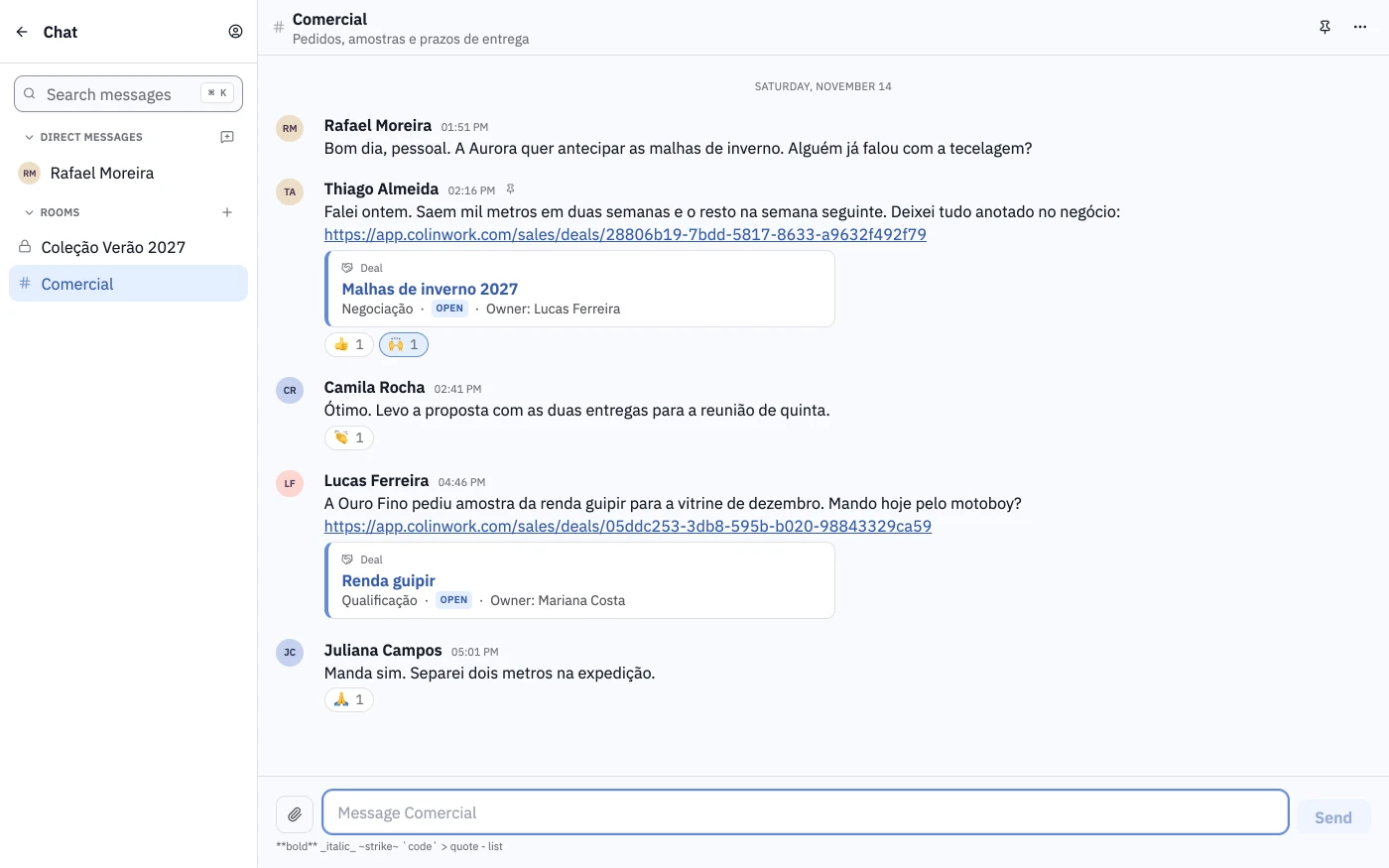
The Comercial room is open: anyone in the company can read it and join. Thiago pastes the link to the winter knits deal and the conversation shows its record card, with the stage and the owner, so nobody has to ask which customer this is about. Whoever agrees gives a boost, a short reaction, instead of one more message saying ok.
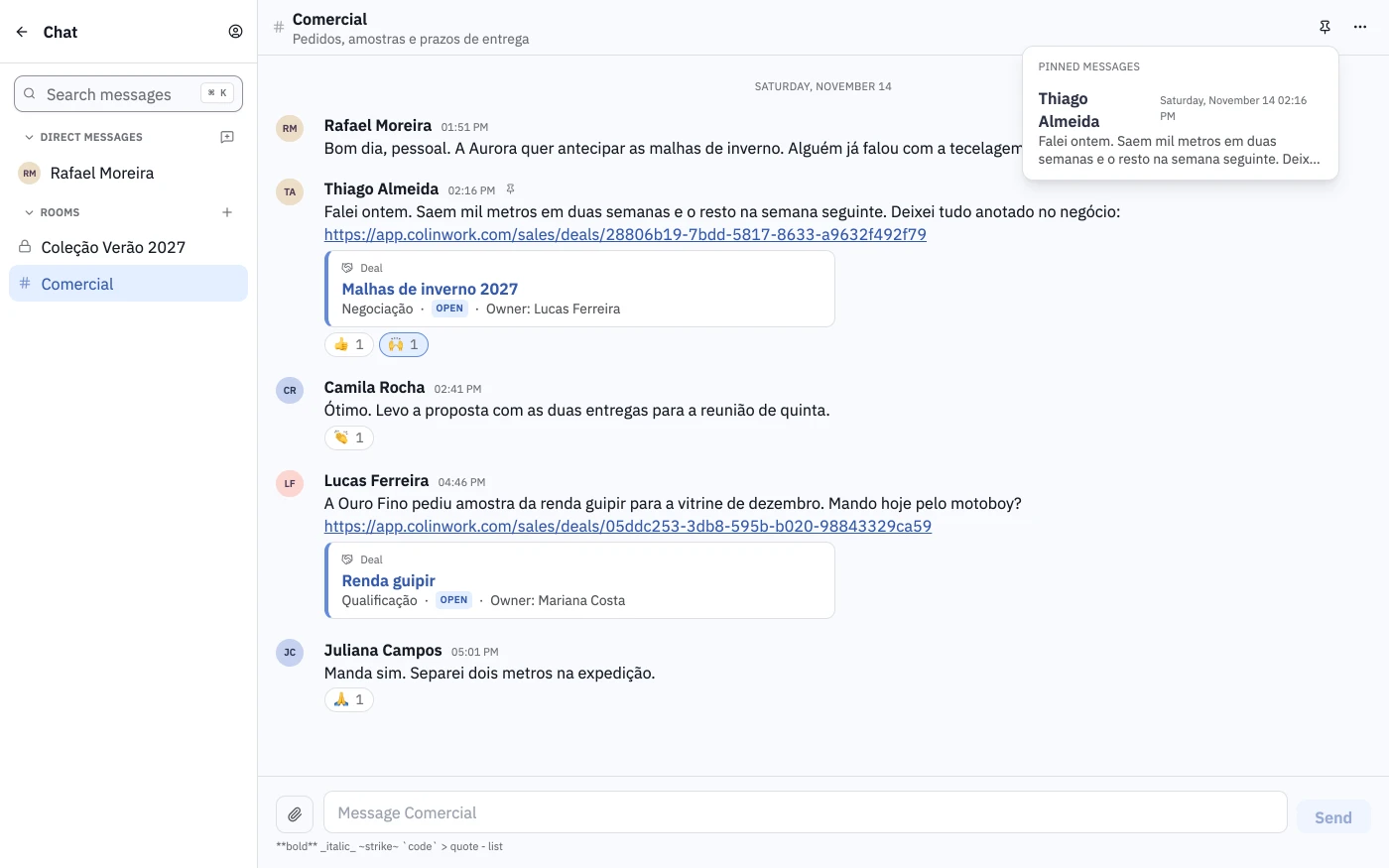
The message with the weaving mill's deadline was pinned to the room. Two weeks from now, whoever needs it opens the pinned messages and finds it, without scrolling through the whole conversation. You can also search any message by its text.
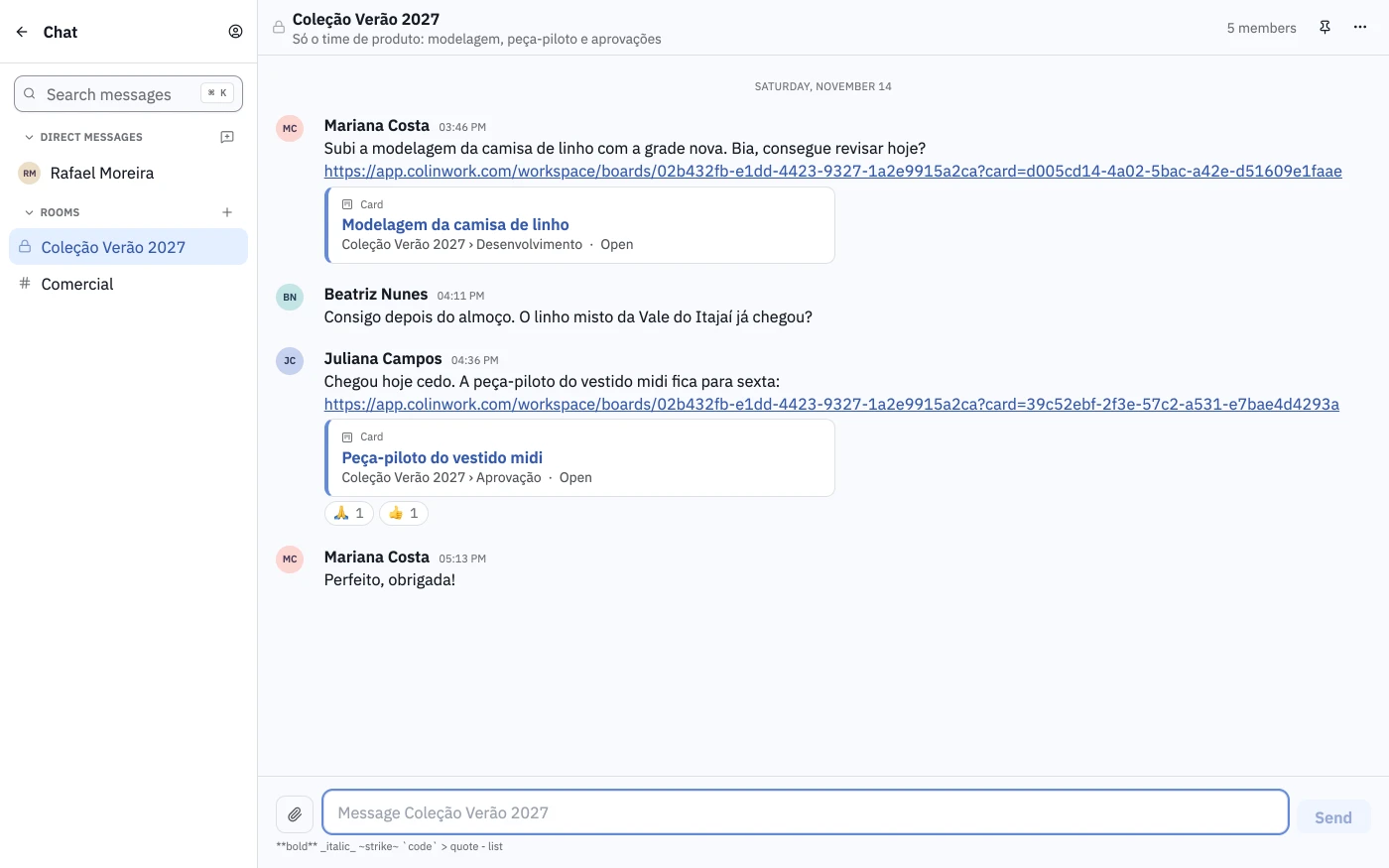
The Coleção Verão 2027 room is closed: only its five members read it, and anyone outside doesn't even know it exists. Mariana pastes the link to the pattern card and the room shows the card's record card, with its board, list and status. Each person only sees the record card of a deal or card they could already open.
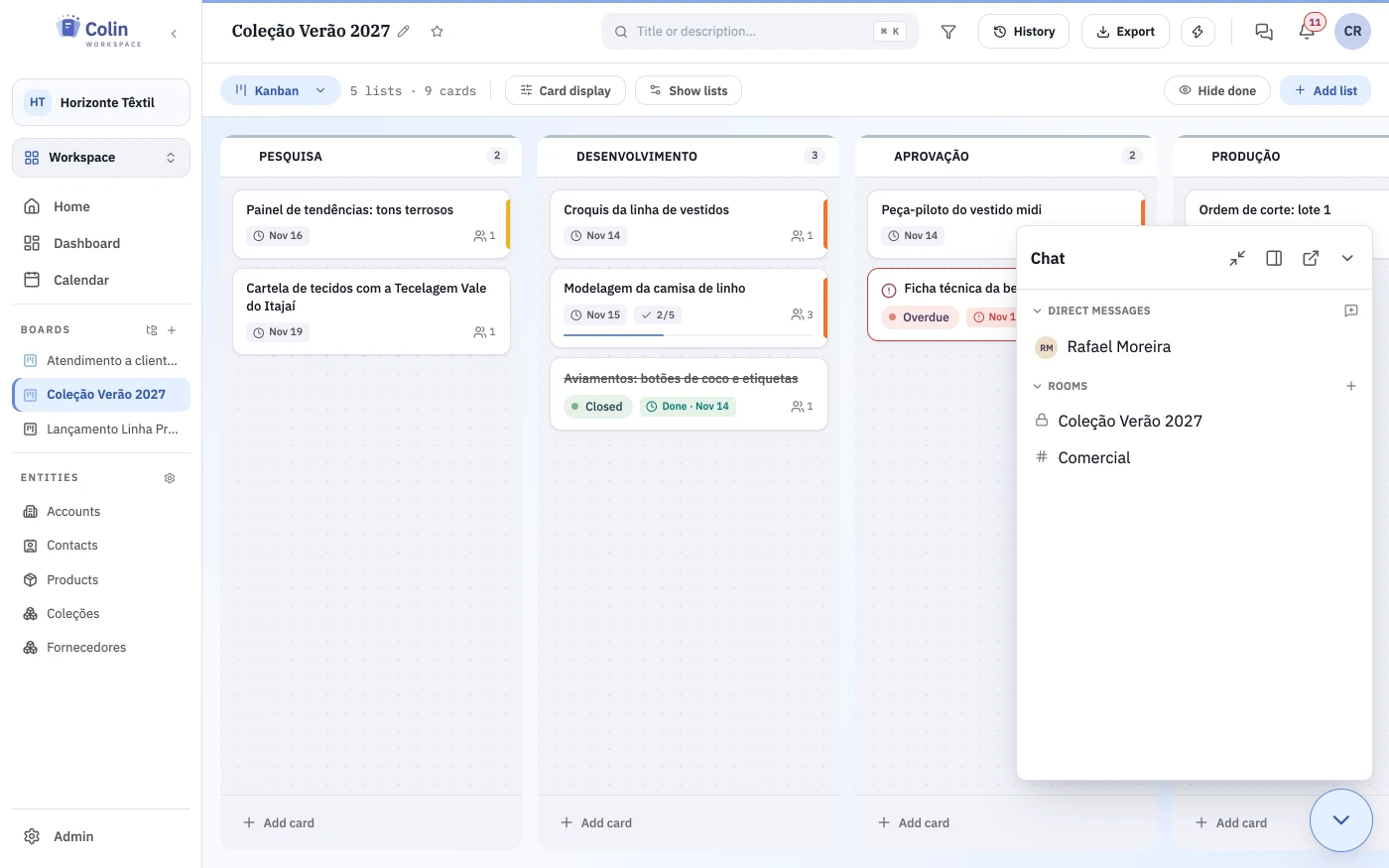
The chat doesn't make anyone switch screens. It opens in a corner, over the board or the pipeline, with the direct messages and the rooms. You can keep it compact, dock it to the side or open the full chat. Whoever prefers it gone turns it off in their own settings.



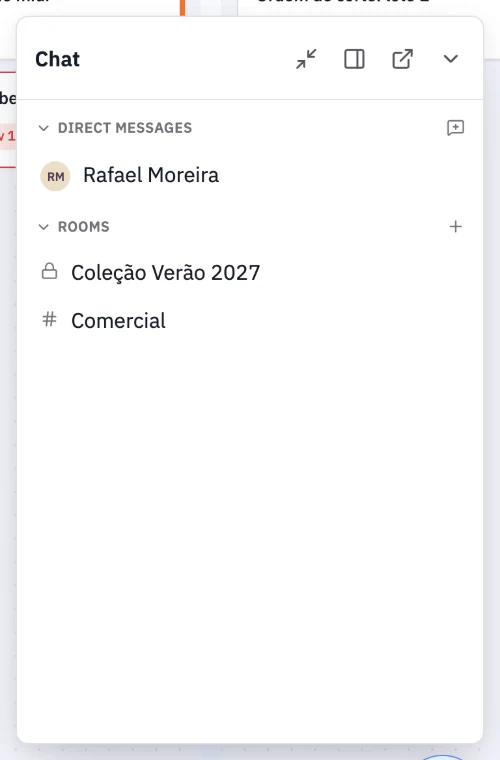
The chat pays off when conversations revolve around customers, orders and tasks that are already in Colin. A few examples:
An apparel maker opens a closed room per collection and pastes the pattern and sample cards there.
A distributor settles delivery dates in the Comercial room, with the customer's deal right in the conversation.
A plant pins what was decided about a batch in the production room, so the next shift finds it.
A services company moves customer matters off personal WhatsApp and into a room that stays with the company.
A software team puts a bot in a room to post when something changes in its system.
In each room, you choose when you want to be notified: every message, only when you're mentioned, or never. In Settings › Platform › Chat, administrators set how long messages are kept and whether links show a preview.
Messages stay in the company's Colin, not on anyone's phone. By default they are kept forever. If the company prefers, administrators choose a number of days, and every night Colin deletes the messages older than that. The rooms stay.
Anyone in the company can read an open room. A closed room and a direct message are read only by their members, administrators included. The record card of a deal or a card is built for each person reading, from what they can already see: someone without access to the deal doesn't see its record card.
New-message notifications say who wrote and in which room, never what was written. Colin's history records who created, archived or changed a room, but keeps the text of no message. Rooms aren't deleted, they're archived. Anyone who gets an offensive message can report it to the administrators or block the person.
Chat comes with Colin, in whatever app the company uses, for everyone in the company. It takes no licence and doesn't have to be granted to anyone.
Boards with your process's lists and cards with an owner, a deadline, a checklist and the conversation.
A rep's day on one screen: the agenda, what's overdue and the next step with each customer.
As many pipelines as you want, with your stages, each one's probability and who reaches the deals.
The sales day, the boards and the chat on iPhone, Android and Apple Watch, with part of the work done even without signal.
Data in Brazil, a history nobody edits, masked personal data and the tools to answer an LGPD request.
A link to a deal, an account or a contact turns into a record card in the conversation, and sales automations can post to a room.
A link to a card turns into a record card in the conversation, and the board's rules can post to a room.
No. It comes with Colin, whatever the company's app, and everyone in the company uses it without taking a licence.
For talking about the work that's in Colin, yes: open and closed rooms, direct messages, files, mentions, pinned messages and search. The difference is that here the deal and the card show up inside the conversation.
Only its members. Administrators don't read a closed room they aren't part of either.
They see the message, but not the deal's record card. Each person only sees the record card of what they could already open in Colin.
Yes, up to ten per message. Images show right in the conversation.
You choose per room: every message, only when you're mentioned, never, or hide the room from your list until you open it again.
By default, yes. Administrators can set a number of days, and Colin deletes the older ones every night.
Yes. An administrator adds a bot to the room, which is an API key with chat access, and the bot reads and writes only in the rooms it was added to.
Register a card, pick the apps and how many seats you want, and nothing is charged until the trial ends. Or we'll show you Colin with your company's boards and pipeline in 30 minutes.
 Chat on WhatsApp